 HarleyMotorcycleParts
Dyna Street Bob (FXDB) Fuel Line: Why Easy Access Is the Trap
The line is easy to reach, which is why people get casual with it.
Being relatively accessible is the best thing about this line, and also the most dangerous. When a job looks like five minutes in the driveway, people drop their guard. They skip the purge, leave the battery on, or decide a short length of hose and a couple of clamps will do. On an injected Street Bob, that is how a cheap repair turns into a fire. Keep the access, but drop the casual attitude.
Tools
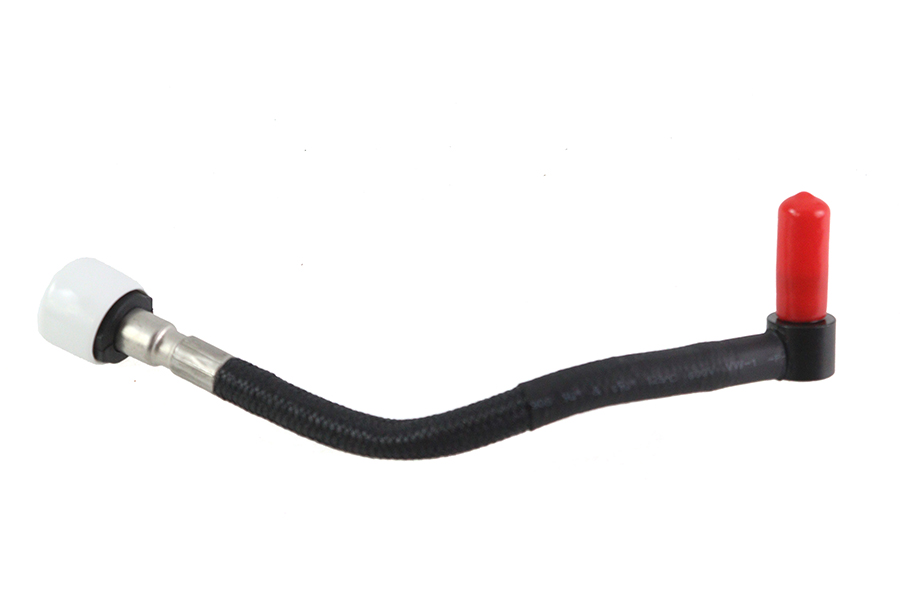
- FXD 2004-2017 line and matching O-rings
- Disconnect tool that suits the sleeve
- Fuel-rated hose and proper clamps if carburetted
- Screw-top gasoline can
- Fire extinguisher good for fuel
- Service manual
Quick identification
Two shocks in plain view at the rear means Dyna, and this is your page. A hidden monoshock means the 2018-up Softail, which uses another line and another guide.
Next, the fuel system. Dyna carburettors lasted through 2006 while our EFI line fit starts at 2004, so an early Street Bob could be either. Follow the feed from the tank. Petcock and hose to a carb means gravity. Quick connector, throttle body and a short buzz at key-on mean EFI, which later FXDB bikes all are.
Why driveway is the wrong mindset
A driveway has neighbours with mowers, kids on bikes, a passing cigarette, and a slope that carries spilled gasoline toward whoever is downhill. Pick a level spot where nobody will wander through. Open air helps, provided that nothing with a flame or spark is close. The motor should be cold enough that you could lean on the cylinders.
Keep your extinguisher, suitable for fuel, out of the spill path, and a screw-top can on hand.
EFI line, start to finish
Begin with the pressure purge set out in your service manual. This is the step that casual jobs skip. Accessible or not, this line is holding high-pressure gasoline even though the bike sits silent. Pump fuse or connector out, engine run or cranked until it dies, and the pump stays off through the end of the job.
After that, battery negative comes off, and you wait out any heat from the run.
Now the convenient part. On many Dynas the fitting and route are easy to see and reach, though exhaust or other parts may obstruct one side, and the manual will say if anything has to be moved first. Get your pictures, then put a rag below the fitting. Operate the sleeve with the push and pull your manual shows. The line comes away, with a little fuel behind it. Plug the port.
Take the rest of it off the bike, unclipping as you go. Compare it to its replacement. Should bends or ends differ, stop and recheck your part against the FXD 2004-2017 fit.
Change O-rings without negotiation. Seals are single-use, and being easy to reach does not make an old one safe. It is the most frequent leak on these fittings.
Press each fitting in until it locks, then pull against it. Clip the new line along the original path, keeping clear of heat, and leave no slack loop that could snag.
Inspecting what the last owner left you
Used Street Bobs have often been through several hands, so stock is not always what you will find. While the old line is out, look for evidence of an earlier repair: a cut-in section, a clamp where none belongs, tape, or a sleeve that has been cracked and glued.
Any of those on a pressure line means you replace the whole run, not the worst part of it. Check the clips as well, as a missing retainer lets the line rub. A bike that has been lowered or had its exhaust changed may also have moved something hot closer to the route, so look hard before you trust the old path.
The hose question, answered
Plenty of old-school riders will tell you hose with a clamp has always been fine. It was, on carbs. That is what belongs on a gravity feed. Fitted on this injected line, it cannot be trusted to hold, whatever brand of clamp you buy. Nobody should ride a bike with that repair.
If yours turned out to have a carb
Close the petcock, disconnect the battery, and drain the hose into your can as it comes off. Cut fuel-rated, ethanol-tolerant hose to fit without kinks, routed clear of heat, and fix it with proper clamps. Renew any O-ring you opened. Inline filter issues live in our Fuel Filter and Fuel System Service guide, which also covers in-tank lines.
Two minutes that decide whether it was done properly
Replace pump power, and connect the battery last. Switch on, keeping away from the button. A brief pump noise then quiet. Examine joints from all sides as the pressure builds, as simple a check as it sounds, and repeat over a few key cycles. A carb bike gets the same inspection after opening the petcock, with several minutes' wait.
Only dry joints earn a start. Check at idle and warm, then ride it a short way close to home before trusting it.
Mistakes that cost money
- Skipping the purge because the line is easy to reach.
- Using hose and clamps on the EFI line because older bikes did.
- Working on a slope where spilled fuel runs to somebody.
- Reusing O-rings since the job seemed minor.
- Buying a line for the Softail Street Bob by name.
When to stop
Take it to a shop if a sleeve or port is damaged, if a previous owner has already spliced the line and you cannot restore it fully, or if you see fuel a second time after redoing a joint.
Parts for this job
Check fitment for your own model and year before ordering — add your bike and we will flag what fits.
Other Harley how-to guides
This guide covers procedure and judgement. Torque figures, fluid capacities, gaps and tension settings are specific to your model and year and must come from the factory service manual for your motorcycle — we deliberately do not print numbers we cannot stand behind for your bike. Independent aftermarket retailer, not affiliated with Harley-Davidson, Inc.